
Views: 0 Author: Site Editor Publish Time: 2026-09-23 Origin: Site


When investors first ask about a brand partnership for a commercial indoor playground, the question is almost always the same: "How much does it cost to use your name?"
It is a practical question. But the phrase "use your name" makes the brand smaller than it is.
What makes a store memorable was never just the letters above the door.
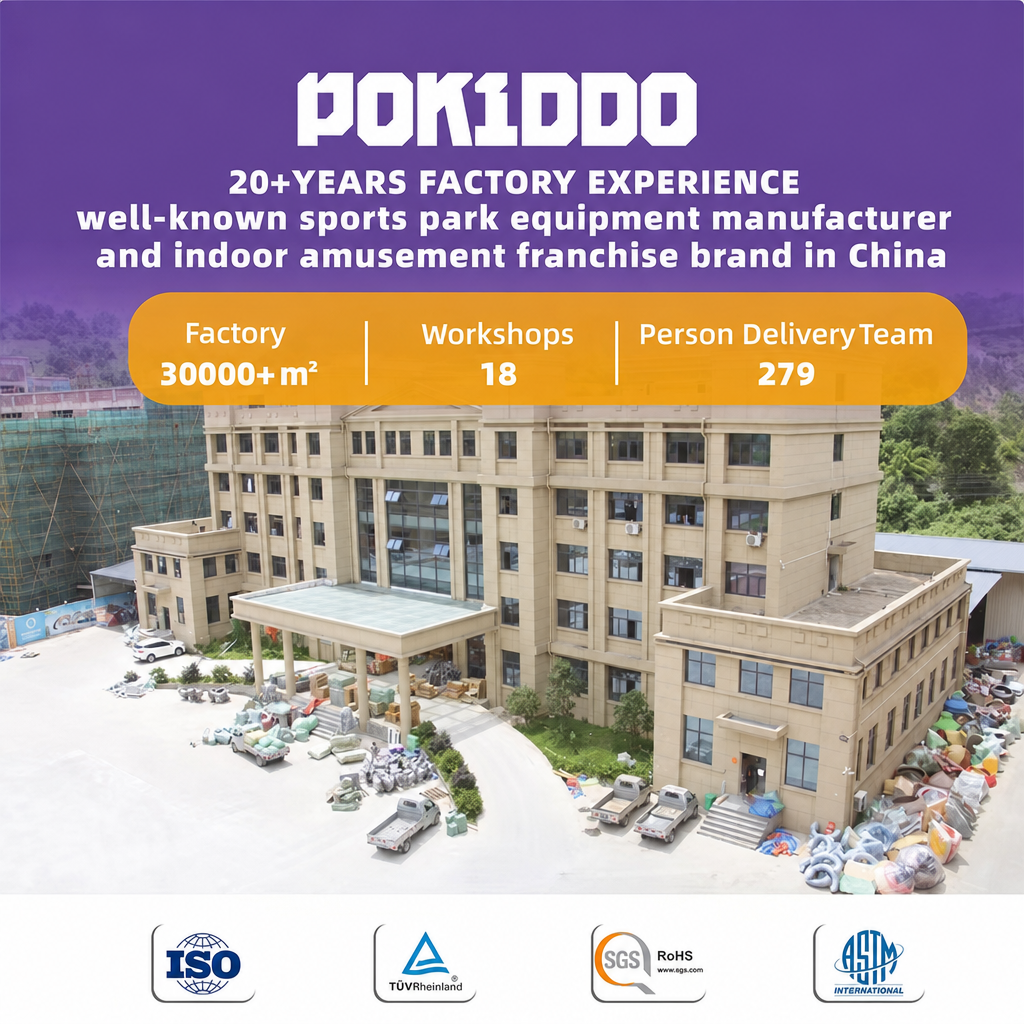
Pokiddo is a commercial indoor playground manufacturer and brand licensor that also operates more than 60 branded parks worldwide.Because the company designs, builds and runs indoor playgrounds, family entertainment centers and indoor amusement parks itself, what it shares with partners is closer to an operating system than a name. That distinction is what makes an indoor playground branduseful to an investor rather than merely familiar.
● A logo is an entry point, not a brand asset system
● Most of the cost of building an indoor playground brand from scratch is time, not design fees
● Cartoon IP characters are the slowest asset to build and the hardest to copy
● A brand partnership delivers a complete, ready-to-use asset set, not a name
● Brand assets are a starting point, not a guarantee of store performance


Suppose you decide today to build your own indoor playground brand from the ground up. The first step is usually a logo. This is not difficult, it does not take long, and it does not cost much. Getting one version that looks right is not much of a challenge.
But a logo is only an entrance.
Customers of a commercial indoor playground recognise a brand through a chain of details: the storefront, the colour system, the typeface, the way staff address guests, the walls of the party rooms, the packaging of the gift shop, the tone of the posters — even the name of the character standing beside the slide.
Added together, that is a brand. The logo is its first letter, not the whole word.


If you decide to build that system from zero for a commercial indoor playground, you will find that the real cost is not the design fee.
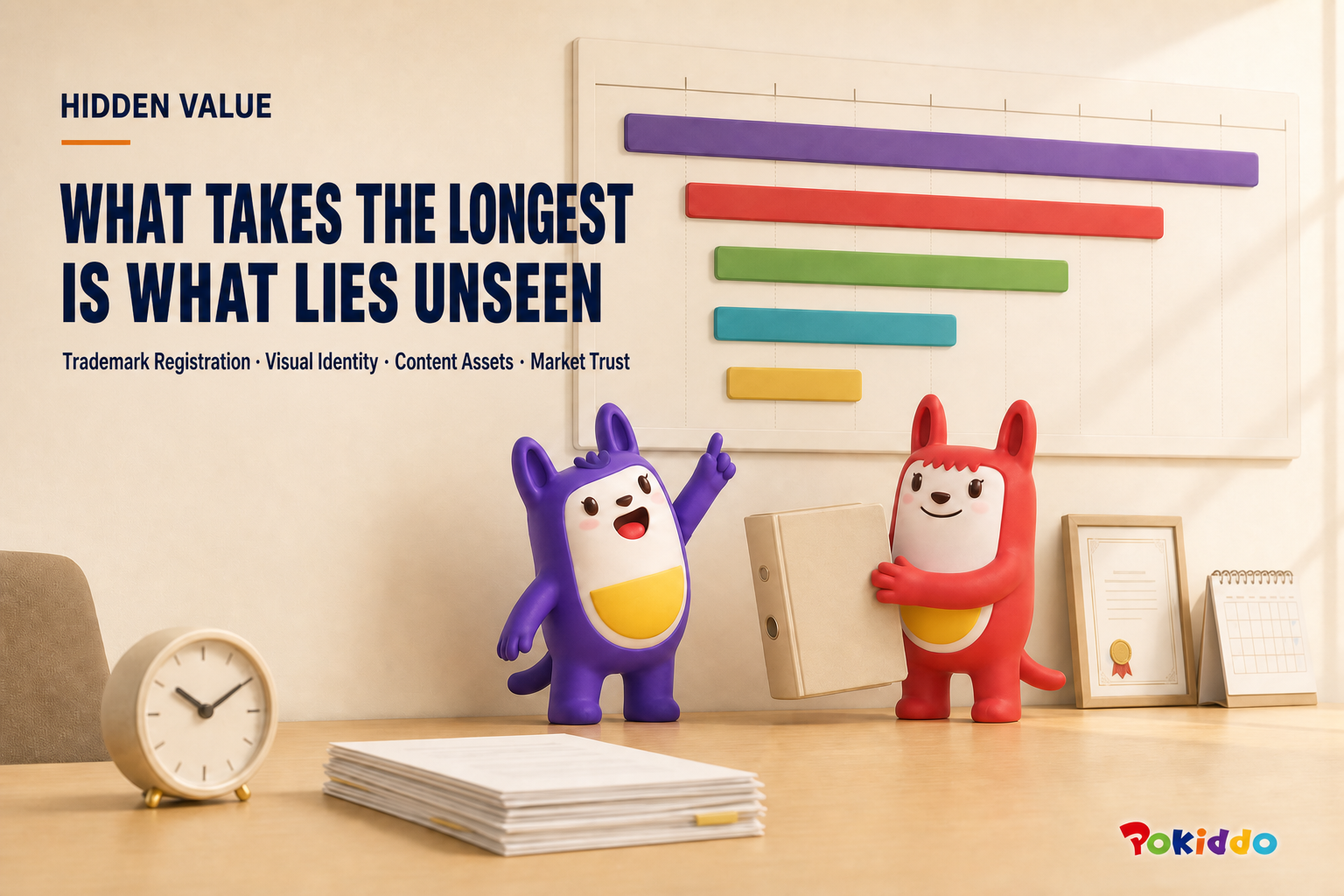
First, sequence and time. Before an indoor playground opens, a trademark has to be searched and registered, and the visual identity has to be settled before the doors open. Otherwise the storefront, the printed materials and the packaging are each produced to a different version and end up contradicting one another.
Second, accumulated content. A brand is not created by writing a slogan. It takes event after event, party after party and year after year of operation before it settles into a stable impression in a customer's mind.
Third, market education. A new name has to be noticed, remembered and tried for the first time by nearby families, and that process cannot be skipped.
Together, these three are the part cross-industry investors most often underestimate — not that they cannot afford it, but that they cannot afford the time.
Pokiddo's IP family includes the characters Popo, Kiki, Dodo and ONEAL.
Their value is not that they are cute. It is that a child will come back in order to see Dodo again, and will pull a friend over to introduce them to Dodo. Equipment can be copied and fit-out can be imitated, but the position a character holds in a child's mind is very hard to relocate.
Characters like these do not exist simply because someone drew them. They need personality settings, continuous stories, a new look for each holiday, and repeated real appearances in parks and at events. For any indoor playground brand, that is year after year of investment.


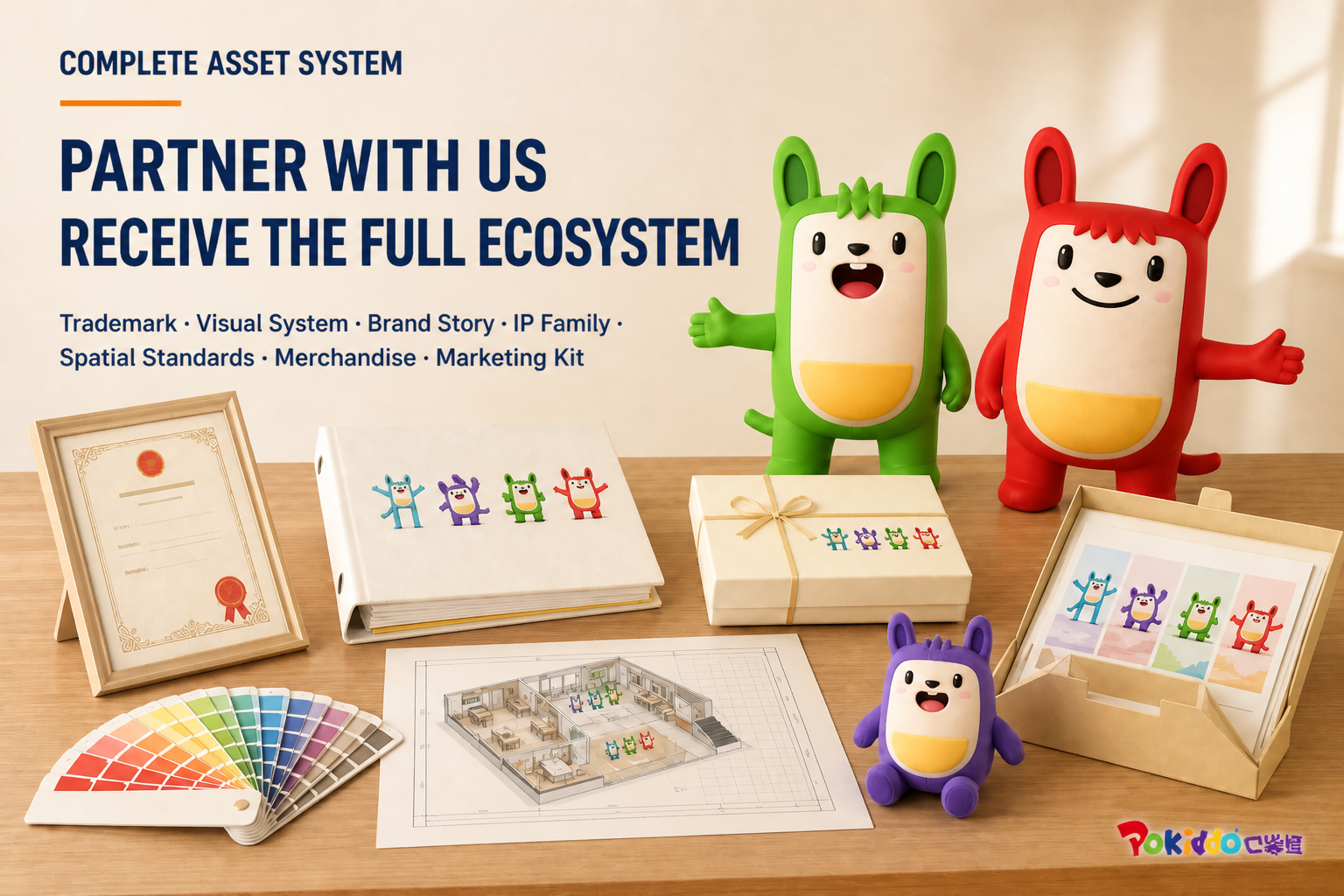
Pokiddo currently operates more than 60 branded parks worldwide. What those parks have built over time is not only recognition, but a complete set of assets that partners can use directly:
● the right to use the trademark and brand name
● the visual identity system
● the brand story and tone of voice
● the IP character family
● spatial visual standards
● merchandise and character products
● a structured marketing asset library
For a new commercial indoor playground, the meaning is very direct: you do not have to spend a long time building a brand from zero. On opening day, the park can already look like something that has been designed.
Guests see familiar characters, familiar visuals and a familiar atmosphere. They do not have to work out who you are.
This is also why a brand partnership is rarely only about the sign. The same asset set applies whether the project is a soft-play indoor playground, a sports-led family entertainment center or a trampoline park franchise, and an established indoor playground brand shortens the period during which customers are still learning what the venue is.

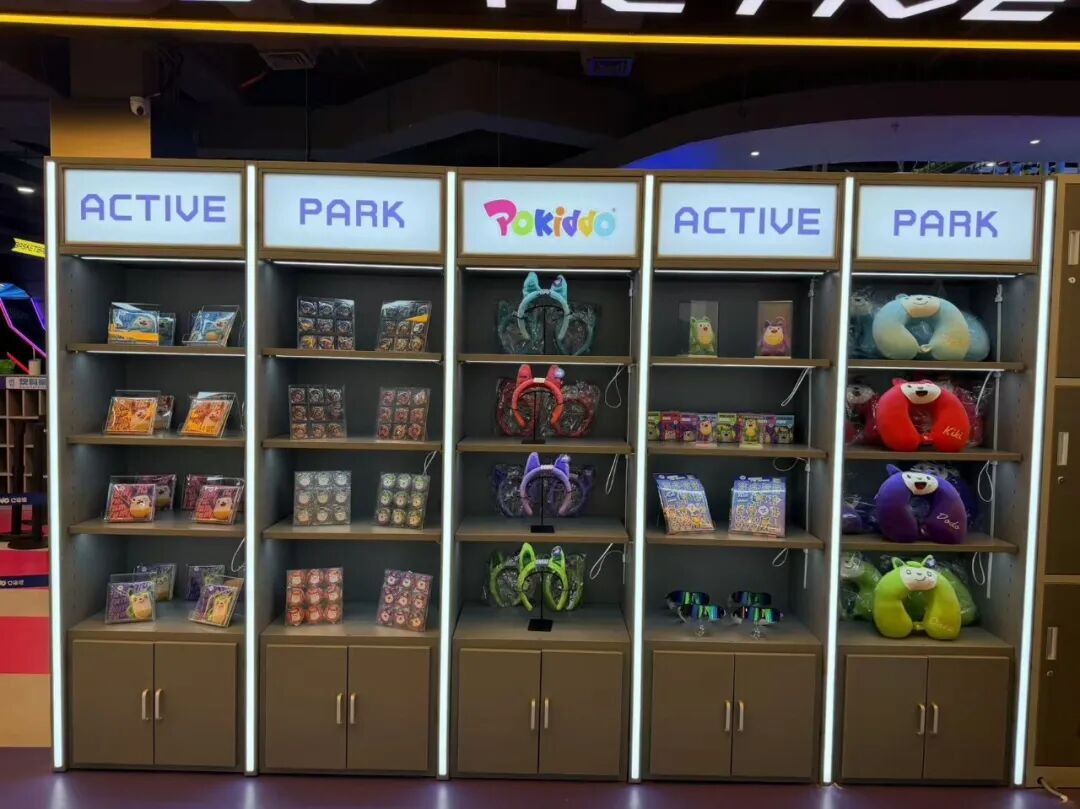
Brand assets are a starting point, not a guarantee.
They help guests recognise you sooner, help the team get into rhythm sooner, and make leasing, recruitment and partnership conversations easier to hold. But whether a commercial indoor playground ultimately keeps its visitors still depends on local operations, service and experience.
The same brand, in different cities and in different teams' hands, will not produce identical results.
That is why, in a partnership, what we look at most closely is whether the investor genuinely intends to run the business — not whether they simply want to borrow a name.

Back to the question at the beginning — how much does it cost to use a name?
A more useful question may be: how many years did someone else spend building what sits behind that name?
Creating your own brand is a completely valid path, and many capable investors walk it well. But if the goal is to open a recognised indoor playground faster and with more certainty, sharing a brand asset system that already exists may be the more efficient choice.
A brand was never about buying a logo.
It is a decision about how long you are willing to wait for customers to remember you.


1.What is included in a Pokiddo brand partnership for a commercial indoor playground?
It covers the right to use the trademark and brand name, the visual identity system, the brand story and tone of voice, the Popo / Kiki / Dodo / ONEAL IP character family, spatial visual standards, merchandise and character products, and a structured marketing asset library. Because Pokiddo is an indoor playground manufacturer that also runs its own parks, the package is a complete asset set rather than a licence to use a logo.
2.How long does it take to build an indoor playground brand from scratch?
Longer than most cross-industry investors expect. The trademark has to be searched and registered before use, the visual identity has to be fixed before the storefront and printed materials are produced, and recognition has to be built through repeated events, parties and years of operation. The design fee is usually the smallest part of the real cost.
3.Why do cartoon IP characters matter to a family entertainment center?
They create a reason to return. A child will ask to come back in order to see Dodo again and will introduce the character to friends. Equipment can be copied and fit-out imitated, but the position a character holds in a child's mind is difficult to move.
4.Does a brand partnership guarantee that a commercial indoor playground will succeed?
No. Brand assets are a starting point, not a guarantee. They help guests recognise the park sooner and make leasing, hiring and partnership conversations easier, but long-term performance still depends on local operations, service and guest experience.
Planning a commercial indoor playground under a shared brand? Ask us for a brand asset list and a city-level feasibility review based on 60+ operating parks.

